Bullying Awareness for Kids With Autism: What Parents Must Know
Key points:
Children with autism face a higher risk of bullying and need tailored support in school and social settings.
Recognising subtle bullying behaviours and taking early action can prevent long-term emotional harm.
Parents can build resilience, partner with schools, and equip children with strategies for everyday safety.
Bullying is a serious issue for all children, but it poses particular challenges for children on the autism spectrum. As a parent, understanding why your child may be at greater risk, how to spot the warning signs, and what practical steps you can take is essential. This article offers you in-depth guidance on bullying awareness for kids with autism, showing how to recognise what is happening, support your child’s social and emotional wellbeing, collaborate with educators, and create a safe environment both at school and at home. The aim is to empower you with knowledge and action-oriented advice you can use right away.
Why Children With Autism Are at Greater Risk
Children diagnosed with autism spectrum disorder (ASD) experience unique social, communication and sensory differences that may make them more vulnerable to bullying. Research shows that children with ASD have significantly higher rates of victimisation compared to their typically developing peers.
For example:
They may have difficulty interpreting social cues, making them less likely to recognise bullying or respond in ways expected by peers.
They might be targeted because they appear “different” in interaction style, sensory responses or verbal ability, and because peers may perceive them as easier targets.
Some children with autism may want to make friends but struggle to fit in socially; this desire combined with challenges can increase risk.
Understanding these factors does not assume the child is at fault; rather it highlights that additional support and awareness are needed.
Recognising Bullying: What It Looks Like for a Child With Autism
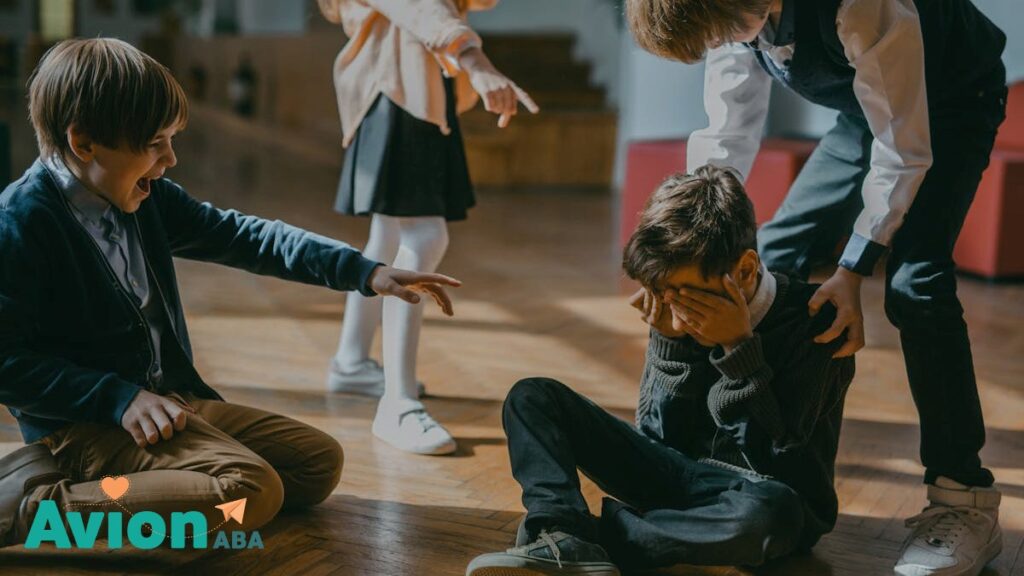
Bullying can take many forms, physical, verbal, relational (social exclusion), damage to property or cyberbullying.For children with autism, recognising these behaviours, and noticing them in your child, may require particular attention.
Common signs parents should watch for
Emotional or behavioural changes: increased anxiety, withdrawal from school, reluctance to go to playgrounds, sudden drop in mood or self-esteem.
Social signs: avoiding peer interaction, preferring solitude after previously attempting social contact, loss of friendships or social rejection.
School related signs: unexplained absenteeism, requests to change class or seat, avoiding lunch or recess, sudden dislike of school or learning environment.
Physical or digital signs: torn clothing, damaged items, uncharacteristic secretiveness about devices, change in online behaviour.
Emotion or expression mismatch: a child may say they’re “fine” when you sense something’s off; because social insight may be limited, they may not label what is happening as bullying.
Importantly, children with autism may not use the same language a neuro-typical child might use; they may describe being “left out” or “wrong” rather than “bullied.” Listening and validating their language helps you respond appropriately.
How to Talk With Your Child About Bullying
Open, consistent, age-appropriate communication is critical. Here are practical steps:
Start by explaining what bullying is in simple, concrete terms: unwanted behaviours, repeated, where someone feels hurt or unsafe.
Use examples relevant to your child’s environment: “When someone keeps teasing you about the way you play, or leaves you out of a group, that is not okay.”
Encourage your child to share what they are experiencing, and validate their feelings: “I can see this made you upset. What happened next?”
Role-play responses: teach them to say “Stop, I don’t like that,” or walk away and tell a trusted adult. Practising scenarios helps build confidence.
Make sure your child knows they are not to blame for being bullied. Emphasise their value, strengths and uniqueness.
Monitor and guide their digital/social media interactions; ask open questions about how they feel in online groups or chats.
By keeping the conversation supportive and non-judgemental you help your child feel safe coming to you.
Working With School and Other Adults
Partnership with the school and other adults in your child’s life is vital.
Meet early with teachers, aides, counselors to share your child’s social profile: strengths, challenges, known triggers, sensory issues, preferred supports.
Ask about the school’s bullying policy, how incidents are reported and managed, and how children with autism are supported in peer interaction and exclusion prevention.
Request regular check-ins: a weekly quick touch-base with teacher or aide can surface concerns early.
Advocate for your child’s involvement in Individual Education Plan (IEP) or equivalent plan: include goals on social skills, resilience, and a clear protocol if bullying occurs.
When discussing incidents, focus on concrete facts, the effect on your child, and ask for collaborative solutions: “What support will be in place?” rather than punitive only.
Building Resilience and Empowering Your Child
Prevention is not only about avoiding bullying. It is also about helping your child develop internal skills and external support.
Practical strategies
Help your child build friendships and trusted peer networks: encourage them to join clubs or groups based on their interests, where they can meet children with shared interests.
Teach self-advocacy: simple statements like “I’m different and that’s okay” or “I don’t like when you do that” can help. Practice in safe settings.
Promote emotional regulation: children with autism may have stronger reactions due to sensory or social overload. Teach calming strategies, deep breathing, safe space, cue cards.
Reinforce strengths: focus on the things your child does well, art, coding, music, storytelling, and connect with peers with similar interests; this builds self-esteem.
Gradually expose your child to tricky social settings with adult support: e.g., structured playdates, supervised group activities rather than unstructured large gatherings.
Monitor mental health: bullying can lead to anxiety, depression, school refusal. If you notice persistent changes, seek support.
By combining resilience building with environment modifications, you give your child a stronger foundation.
What to Do If Bullying Is Already Happening
If you discover your child is already experiencing bullying, act systematically and calmly.
Document the incident(s)
Date, behaviour, who was involved, how your child felt, any action taken.
Meet with the school
Present your documentation, ask for an investigation, request a follow-up plan and timeline.
Ask what they would like to see happen, what they feel comfortable with.
Explore external support
Child psychologist, autism support group, social skills group.
Review online safety
If cyberbullying is involved, change passwords, monitor interactions, report on platforms if needed.
Evaluate progress
Set check-in dates with the school and at home to see if the bullying is reducing, and your child is feeling safer.
Preventing Bullying at Home and Beyond
Prevention extends into home life and how the wider community engages with your child.
Create routines at home where your child feels secure, heard and supported.
Invite peer interactions in a safe environment: moderated playdates, structured games, evening visits rather than large open-ended parties.
Educate siblings and other children in the family about autism, difference and empathy: often bullying begins with lack of understanding.
Encourage inclusive extracurricular activities where children with autism can play a role, contribute and feel successful.
Teach digital literacy and safe social media use early: children with autism may be trusting and less aware of risks; guide them proactively.
Emphasise kindness, empathy and neurodiversity in conversations: normalising differences reduces the “target” effect.
FAQ
What are common types of bullying for children with autism?
Verbal teasing, social exclusion, being ignored, relational aggression and cyberbullying are common forms.
How do I know if my child is reluctant to speak about bullying?
Look for sudden mood change, refusal to go to school, silence about friends, unexplained changes in behaviour or routines.
Can being targeted for bullying affect my child’s mental health long-term?
Yes, persistent victimisation is linked to increased anxiety, depression, school avoidance and lower self-esteem in children with autism.
Empower Your Child to Respond to Challenges with Strength
Every child deserves to feel safe, respected, and supported, especially those on the autism spectrum. At Avion ABA, we help children build the confidence, communication, and social understanding needed to navigate and respond to bullying effectively.
Our therapists teach essential self-advocacy and coping skills while working closely with families and schools to promote inclusion and awareness. We focus on empowering children with autism to develop friendships, resilience, and a sense of belonging in every setting. If bullying has impacted your child’s confidence or emotional wellbeing, contact Avion ABA today. Together, we can create a safer, more supportive environment where your child can grow, connect, and thrive.