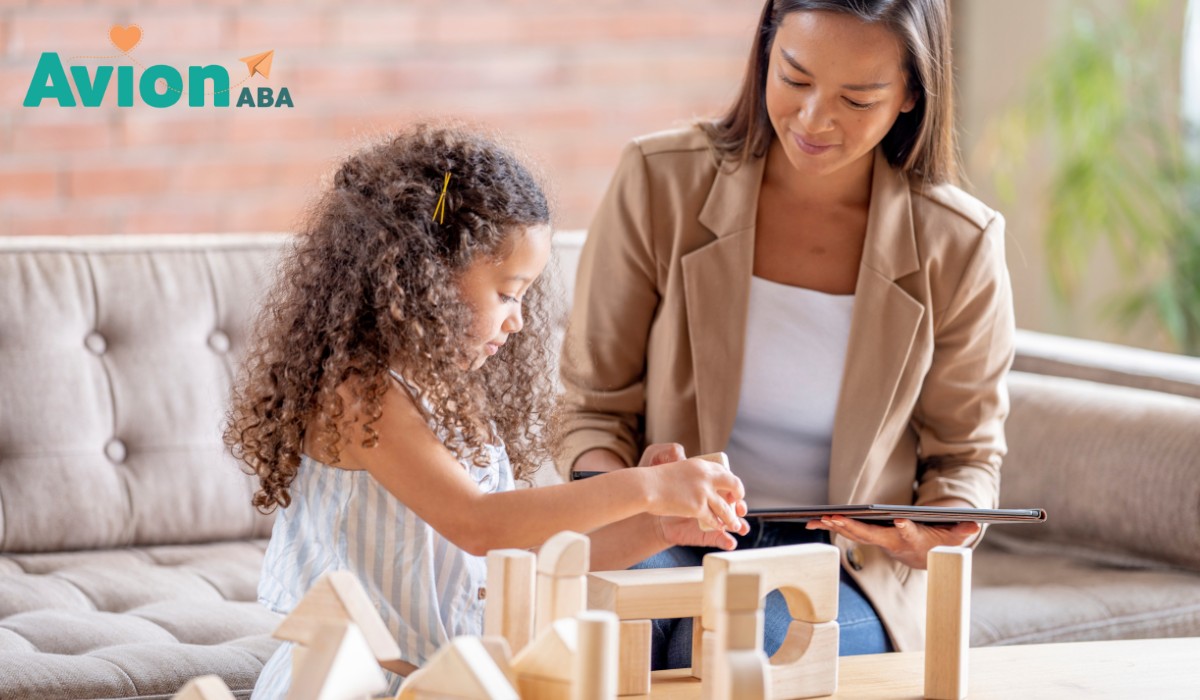
Starting therapy for your child can feel like a big…
Read More
Communication is one of the most important skills a child develops. It allows children to express their needs, connect with others, and participate more fully in everyday life. For many autistic children, communication does not develop in typical ways, which can lead to frustration for both children and families.
ABA therapy focuses on helping children develop meaningful ways to communicate in real-life situations. Through individualized programs and practical teaching strategies, ABA therapy communication skills programs help children learn to express themselves more effectively. At Avion ABA, we focus on building communication skills that children can use at home, in the community, and during daily routines through ABA therapy in Kansas.
Communication includes much more than spoken language. Some children communicate using words, while others use gestures, pictures, or assistive devices. ABA therapy focuses on helping each child develop the most effective way to communicate based on their individual needs.
When teaching communication skills with ABA, therapists look at several areas of development. These often include:
Communication programs are individualized so that children learn skills that are useful in their daily lives.
Communication involves both understanding language and expressing ideas. ABA programs typically address both expressive language and receptive language skills so children can participate more successfully in everyday interactions.
Expressive language refers to how children communicate their thoughts, needs, and feelings. This may include spoken words, signs, picture systems, or communication devices. Therapy focuses on helping children expand their vocabulary and learn how to communicate clearly and consistently.
Receptive language refers to how children understand what others say. This includes following directions, responding to questions, and understanding everyday language. Many children benefit from structured teaching that breaks down instructions into manageable steps and provides clear guidance.
Developing both expressive and receptive skills helps children communicate more confidently and independently.
One of the most effective approaches used in ABA is functional communication training. This method focuses on teaching children to communicate their needs in ways that are clear, appropriate, and effective.
Many challenging behaviors occur when a child cannot communicate what they need. For example, a child might cry or become upset when they want a break or need help. Functional communication training teaches children to replace those behaviors with communication skills.
Children may learn to:
As children develop functional communication skills, frustration often decreases and cooperation increases.
Communication skills are most meaningful when they can be used throughout the day. Everyday communication ABA focuses on teaching skills during real-life activities rather than only in structured teaching sessions.
Therapists may work on communication skills during:
Practicing communication during familiar activities helps children learn when and how to use their skills naturally. This approach also makes it easier for families to support communication throughout the day.
Each child’s program includes individualized communication goals in ABA therapy based on their current abilities and long-term needs. Goals are designed to be practical and meaningful so children can use their skills in real-life situations.
Communication goals may include:
These goals evolve as children develop new abilities.
Parents play an important role in supporting communication growth. Children learn best when communication skills are practiced consistently in everyday situations.
Therapists work closely with families to show how communication strategies can be used during daily routines. Parents may learn how to prompt communication, reinforce attempts, and create opportunities for children to practice new skills.
When communication strategies are used consistently at home and during therapy sessions, children often make faster and more meaningful progress.
As communication skills improve, children often become more confident and independent. Being able to express needs and understand others reduces frustration and helps children participate more fully in family life and social situations.
Improved communication can help children:
These skills support long-term success in many areas of life.
Developing communication skills takes time, patience, and consistent support. With individualized planning and real-world practice, children can make meaningful progress in how they understand and use language.
At Avion ABA, we focus on practical communication skills that children can use in everyday life. Our approach to ABA therapy communication skills development emphasizes real-world learning, individualized goals, and strong family collaboration through ABA therapy in Kansas.
If your child would benefit from support with communication, Avion ABA is here to help.
Contact Avion ABA today to learn more about ABA therapy in Kansas and how we can help your child build stronger communication skills.
Starting therapy for your child can feel like a big…
Read More
ABA therapy is most effective when families and therapists work…
Read More
When families begin exploring ABA services, one of the first…
Read More
Independence is an important goal for every child. Learning how…
Read More
Communication is one of the most important skills a child…
Read More